HD(MT)IV Manifesto
Montana Heavy Duty style is about wearing durable items, pieces to be used at multiple points during a day, a season, a year.
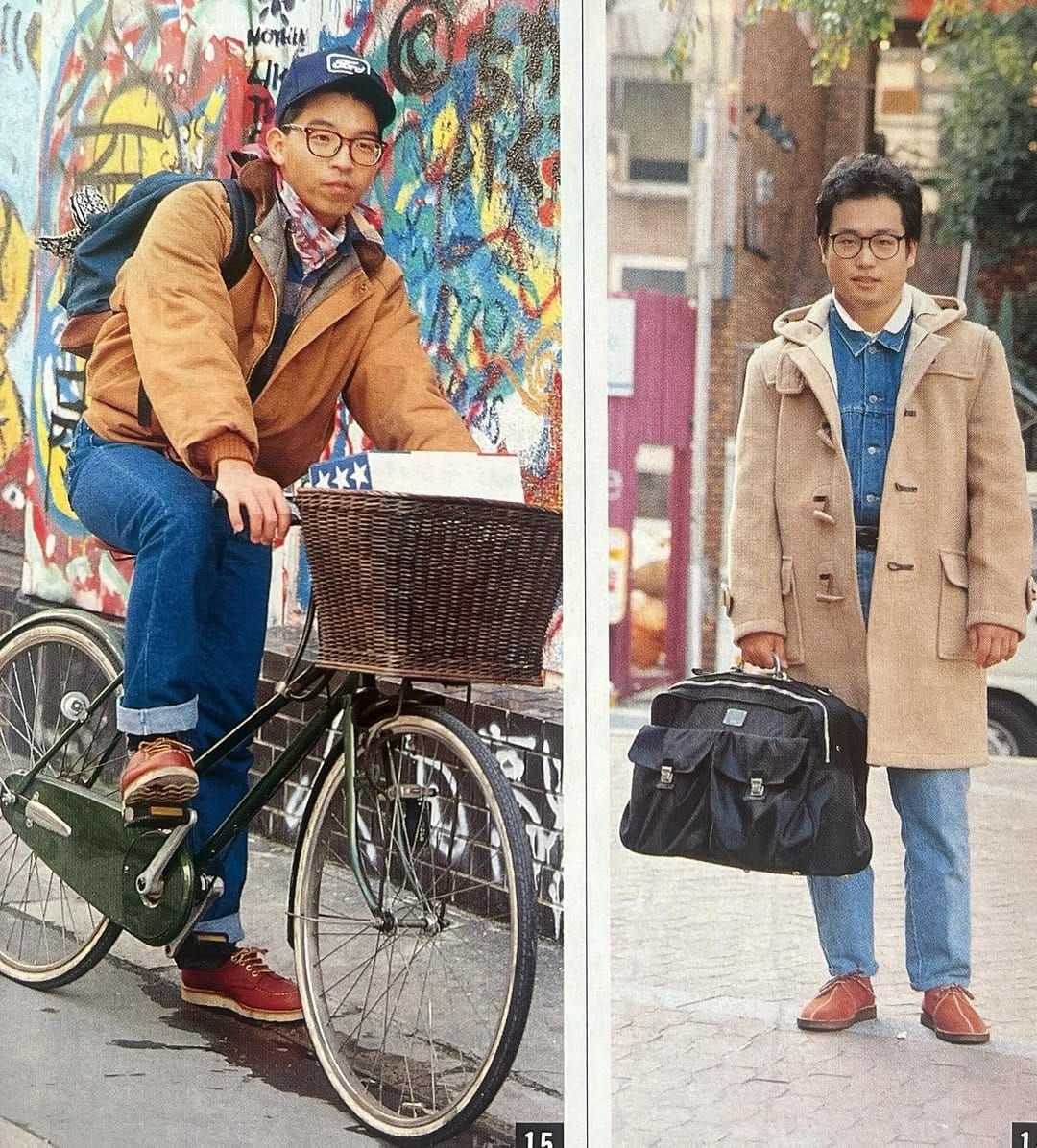
Yasuhiko Kobayashi’s September 1976 Japanese Men’s Club article “Heavy Duty Ivy Party Manifesto” was a joke. Part of his monthly column, “Honmono sagashi tabi,” or “A journey in search of real things,” the article was laser-targeted at what we would now call the heritage clothing movement, as “real things” tended to be American outdoor clothing from places like L.L. Bean, Red Wings, Levi's and other like brands. While Kobayashi’s original driving feeling was that Japan was too delicate and hilariously, “fashion-focused,” this early fall column was a jesting manifesto describing how men could dress like American college students at CU-Boulder or Dartmouth. The look: "goose down vests, hiking boots, and 60/40 parkas" is what you would wear at the bottom of a ski hill or on a brisk fall day just before getting a coffee at a hip shop or taking a hike on Mount Sentinel here in Missoula, MT. The joke turned out to be a breakthrough in fashion for a fashion-focused community.
In “Heavy Duty Ivy Party Manifesto,” Kobayashi connected a new system of clothing to Japanese men’s fashion. Clothing “systems” like the Ivy League style that had taken Japan by storm two decades before had proved enduringly popular. For Japanese men, these systems were published in manuals that existed in magazines like Men’s Club or Heibon Punch. The system told men what to wear when: occasion-specific outfits looked entirely different but still shared a common aesthetic. Loafers, a button-down collar, rep pattern tie, chinos and a rumpled sport coat could be worn in class or on a date, but flannels, duck boots and jeans were worn while canoeing. This might sound obvious to most Americans with a passing understanding of fashion in the United States, but in explaining it to an entirely different culture, the system became extraordinarily important. Kobayashi’s stroke of genius was to take the Maine outdoor style as popularized by L.L. Bean and worn on those outdoorsy campuses and package it in a way that garnered the full attention of a significant portion of the Japanese male fashion marketplace.
That moment as chronicled in W. David Marx’s Ametora has stuck with me for reasons I couldn’t quite put my finger on for a while. But as I have looked around the town I live in and have become more seriously interested in clothes, from their construction to how people wear them, I have noticed a trend that I find I dislike immensely: men in Montana (and elsewhere in the American West) dress in ways that directly contravene their best interests.
Today’s fashion critics have made plenty of hay of how men tend to dress, and why that’s bad. My view is less global and more local, but those critiques find their home here, too. And that is why I am offering Montana Heavy Duty style as another option for those interested in dressing in ways that fit here (that is, Montana) and fit them, too.
Fashion tends to be framed as for either the very wealthy (Paris, haute-couture, the exorbitant price of a Drake’s sex watch, etc.) or the very cool (Instagram influencers, guys on Bluesky, that skinny barista downtown with the sick tattoos). Montana Heavy Duty style is not going to be worn by everyone. It is a system of thought that can be used to reassess aesthetics of dress beyond which camo brand a person wears. The larger goal of the Montana Heavy Duty style is for people to dress in ways that appeal to the nature of the place they live. The issue as it stands is that many men are dressing in ways that are giving up style and good taste in favor of layers of “technical” clothing and bad fashion decisions.
Fashion is always changing. And because it is always changing, there is forever a discourse about “permanent” fashion or “classic” style. The fact of the matter is, no style lasts forever. But Montana Heavy Duty style is in search of the kinds of outfits that make sense for the kinds of activities people who live here actually do and can look good beyond just those activities.
At no point do I suggest that fashion be a bell-weather for the value of a person. Fashion is clearly a symbol of status, and status ≠ human value. If there is an opportunity to challenge certain expectations around how men dress, I’ll do it. Change is less likely, however, as cranky manifestos rarely lead to social change. But changing how men can dress or ought to dress is valuable, because frankly modern men’s clothing can be absolutely atrocious. Much of that comes down to not having a system that can include more than just two or three fashionable outfits.
Montana Heavy Duty, as I propose it, is informed by the longevity of 1940s men’s tailoring in male fashion and the awareness that synthesis of cut, fabric and detail makes a classic piece of clothing. Sugar Cane’s 1947/1955/1966 line of jeans are one of my favorite denim designs because they showcase the ebb and flow of fashionable silhouette. The 19-year period they cover recedes and expands, and the historical accuracy of the work shows the in and out nature of the jeans’ cut. Sugar Cane doesn’t bother to make a single jean that purports to be the perfect cut, because it would change every few years. The decision to make those shapes and cuts and silhouettes, and the fact all body types would look good in one or the other of them means their style is a classic one. So even though the jeans are different, these pieces could all be Montana Heavy Duty style depending on the particular task the wearer is undertaking.
As a rule of thumb, workwear is always Montana Heavy Duty style. Leather motorcycle jackets? Sometimes. Nylon bomber jackets, yes. Japanese denim qualifies almost always, as does herringbone twill and the waxed fabrics that make up thorn and weatherproof outerwear. Technical clothing (think Arc’teryx, Patagonia, all hunting-specific clothing lines, Columbia PFG, etc.) can be Montana Heavy Duty as well, but can never be the only kind of clothing in an outfit to be considered Montana Heavy Duty.
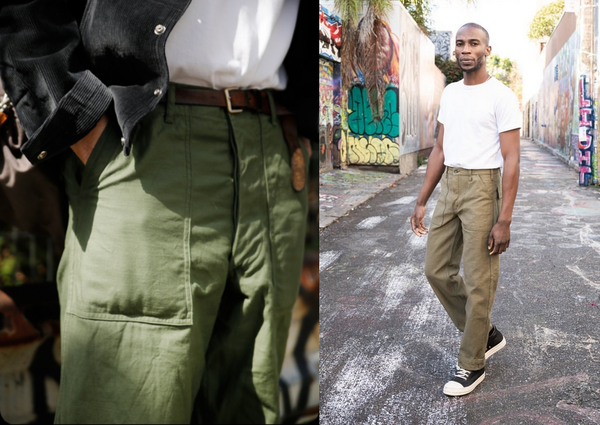
Montana Heavy Duty style is about wearing durable items, pieces to be used at multiple points during a day, a season, a year. It can seem ridiculous to wear 1940s American military-cut trousers in herringbone twill in 2025 considering the massive leaps in the quality of technical fabrics. But the sheer durability of the United States Marine Corps’ P-44 trouser is worth considering (although I will not lay judgment on the monkey pocket’s stylistic value for daily wear just yet). While there is immense value in the kinds of technical fabrics regularly worn up here, Montana Heavy Duty style is less inclined to just look at the usefulness of a piece of clothing and more at the larger question of the style of the piece of clothing. Perhaps the monkey pocket on those P-44s can be used to stuff a rain jacket into like was originally intended, or the large pockets filled with a hunting kill kit and granola bars, a fire starter and knife while out chasing big game in the Bitterroots or Sapphires.
Detail matters in Montana Heavy Duty style. The decision to add an additional button, to use that particular fabric, include that extra dart or sew in another pocket should have a purpose, even if the purpose is archaic. A pocket might hold no hammers in its life, but a cell phone might fit nicely instead. And a fabric’s nature (particularly if it is over 10 oz, which is where I think good fabric really begins) is always the most important part of the puzzle. But without good, strong design language, the function of a piece can be lost in the form.
It is important to also acknowledge that the imagined use cases for clothing are the core of an item’s identity and inform their design. Montana Heavy Duty style is thinking about those use cases and choosing pieces in an outfit based on those imagined events. And it rejects the idea that some pieces of clothing can be worn anywhere, at anytime. Following certain rules does matter, because style is about how we relate to one another and relating involves following a set of rules.
While this kind of specificity in attention to clothes’ imagined meaning and uses might seem overly precious and possibly old-fashioned, the importance of purpose in a clothing item is actively the point of Montana Heavy Duty Style. Wearing boots or pants or coats that come from a lineage of design does not inherently make them more useful or more Heavy Duty. But it does ask questions about the longevity of an item. Why does the N-1 Deck Coat or a Red Wing moccasin-toe boot have such staying power? Where does a hunting plaid look right, and why do vintage Pendleton board shirts age so beautifully?
This manifesto is also not to senselessly gush over how fashion was — fashion is always shifting based on the temperature of culture and weather. I am positing a different style for wider wear (literally!) because I think the new look of the outdoorsman is ugly and not nearly as stylish as its marketing might suggest.
Over the seasons it is likely to to encounter men wearing a uniform comprised of, but not limited to: hunting pants, a tight t-shirt, Garmin watch, trucker hat, sport sunglasses, Hokas or other long-distance shoes, a puffy jacket in the winter and a sun hoodie in the summer. The silhouette is slim, conforming to the body. Then there is the baggy, too long shorts or too-tight joggers with square, over-large fishing shirts, golf polos, or other technical fabric cut and sewn into clothing the fabric does nothing for. They are baggy or form-fitting silhouettes, but there is no shape or drape to them.
The reason men in Montana rarely dress for any sense of fashion or style, is mostly to be reactive to the changing temperature. The problem is, not dressing for fashion or style still means you are dressing for both of those things. A certain kind of modern Montana man dresses like hunter and influencer Steven Rinella or podcaster Joe Rogan as he listens to them in his huge truck with a tiny bed, driving into town to go to Costco from his new-build ranchette home on what used to be working agricultural land. This is a stylistic decision, and one I disagree with.
Technical outdoor wear is made and marketed for its multiple layering options and functionality. That’s why it’s so popular and worn constantly in this state. Pockets and zippers and new kinds of fabric are meant for the purposes of hunting or fishing or climbing or hiking, but not at all for the purposes of making someone look good in the way more tailored looks do, particularly in town. Looking good is a core goal of clothing (after shelter from the elements, a task at which technical clothing obviously does a great job).
The decision by hunting, fishing and hiking companies to sell collared shirts in technical fabrics or the decision by the modern outdoorsman to wear KUIU or First Lite or Sitka logowear (but never the companies’ camouflage in town because that’s gauche) is also a stylistic choice. Rifle hunter, bow hunter, duck man, elk fanatic, mule deer freak, gear fisherman or fly angler, the clothes do in fact make the man, even if everything about the silhouette attempts to straitjacket them into a product. Pants that zipper open at the thigh are not daring options for the straight male, but efficient heat dispersing vents after a hike. Cargo pockets have no history as military adaptations, but instead are meant to carry a cell phone and metal wallet with a Costco card inside used to fill the tiny bed of that massive truck with toilet paper and La Croix. Popular men’s style has been smoothed and tightened into slim-fit polos or tight t-shirts and chinos or joggers, all in stretchy technical fabrics. The social pressure of not standing out keeps men dressing in those selfsame items at all times.
Without a set of parameters for when or where clothes can be worn, clothes lose their identity in a sea of opportunity. Believing a certain outfit like a polo and chinos can be worn anywhere leads to static wardrobes and boring looks purchased with the goal of not standing out. The straight masculine urge to not be seen as different (but at the same time important and strong and special) makes for strange thinking and bad clothing.
That’s why I’ve written this manifesto. The larger goal of this particular project is to put words to a desire I have to codify some of my own thinking about fashion and to also express some misgivings about how it is sold. Slow fashion and emotional durability are terms that have definitions but not a lot of meaning, and certainly trend-chasing companies are the polar opposite of Montana Heavy Duty style. I am interested in the tenets of durability, longevity, and endurance.
My plan at this point is to write about the history of some items, about other items I like, about fishing and hunting and writing and how they connect to Heavy Duty ideas, and how all of this is not really intended to be evangelizing, but is more for my own personal pique. While I will point to some designers as great practitioners of Montana Heavy Duty style, the hope I have is to focus on specific pieces and to go through their interest to me by looking at the importance of their connection to cohesive outfits. And a note about cost: quality does cost coin. But the kinds of clothes that last a long time are in the same ballpark as Sitka, or KUIU, or First Lite, the big three of hunting gear. Fly rods run a thousand dollars no problem these days. Fishing boats are thousands upon thousands of dollars, as are the Tacomas and Tundras and Go Fast campers and other sundry items seen regularly around western Montana. Clothes don’t have to cost exorbitant amounts to be considered Montana Heavy Duty, but quality is worth paying for in my mind, and my suggestions will reflect that belief.
The heritage revolution has come and gone, but the greater goals of workwear remain. Well, clothing doesn’t have goals, but clothes do have a purpose.